

Breast cancer is a terrible plight for people, that’s undeniable. But pet owners may wonder if it can afflict their animal companions as well. The answer, unfortunately, is yes. Dogs can get breast cancer. In fact, 1 in 4 unspayed female dogs are affected by it. Cats can also get breast cancer, as can mice, and many other warm-blooded animals.
For now, we’ll focus on breast cancer in dogs—its uniqueness, risks, and symptoms. We’ll also explore how breed plays a role in its development. Potential treatments will likewise be highlighted.
How is Dog Breast Cancer Different from Human Breast Cancer?
Breast cancer tumors in dogs can be found along the lower abdomen. Similar to human breast cancer, dog breast cancer exhibits a wide variety of tumor types. For instance, a 2024 study published in International Journal of Molecular Sciences titled “Canine Mammary Tumors: Classification, Biomarkers, Traditional and Personalized Therapies“, showcased a number of these variants. Some of these growths are benign and pose little threat, while others are malignant and can aggressively spread to other parts of the body, including the lungs and lymph nodes.
One key difference between human and canine breast cancer is the way it responds to hormonal influences. In dogs, hormones play a significant role in tumor development, with unspayed females being at much higher risk. Another major distinction is that while human breast cancer is often detected through routine screenings like mammograms, mammary tumors in dogs are typically found when the owner notices a lump or swelling since such diagnoses aren’t usually asked for in pet check-ups.
Pet owners may be happy to know that another way that dog breast cancer distinguishes itself from its human counterpart is how only 50% of dog mammary tumors are malignant, which is a much lower rate than the malignancy rate of human breast tumors.
How Common is Breast Cancer in Dogs?
Cancer in general is a major health concern for dogs. The American Veterinary Medical Association estimates that almost half of dogs over the age of 10 will develop some form of cancer. However, breast cancer is one of the most common types of cancer in female dogs.
Breast cancer in dogs is surprisingly frequent, particularly in female dogs that have not been spayed. It accounts for over 50% of all tumors found in female dogs, making it one of the most frequently diagnosed cancers in canines. In the 2024 MSD Veterinary Manual chapter for “Mammary Tumors in Dogs”, oncologist Karin Sorenmo noted that approximately 1 in 4 unspayed female dogs will develop the telltale mammary tumors during their lifetime. Fortunately, only about 50% of these tumors are malignant, meaning not all cases are life-threatening.
Male dogs can also develop mammary tumors, but the occurrence is exceedingly rare, with less than 1% of mammary tumors found in male dogs.
What Increases the Risk of Breast Cancer in Dogs?
Several risk factors contribute to the likelihood of a dog developing breast cancer:
- Spaying Status: According to the study “Canine Mammary Tumor Risk Is Associated with Polymorphisms in RAD51 and STK11 Genes“ published in the 2025 issue of Animals, dogs spayed before their first heat cycle have a significantly lower risk (approximately 0.5%) of developing mammary tumors compared to intact dogs. Spaying after one or more heat cycles still provides some protection, but the risk increases with each additional cycle, reaching higher levels (e.g., around 8% after the second heat and 26% after two or more years) if a dog remains intact.
- Age: Middle-aged to older dogs (typically 6 years and older) are at the highest risk.
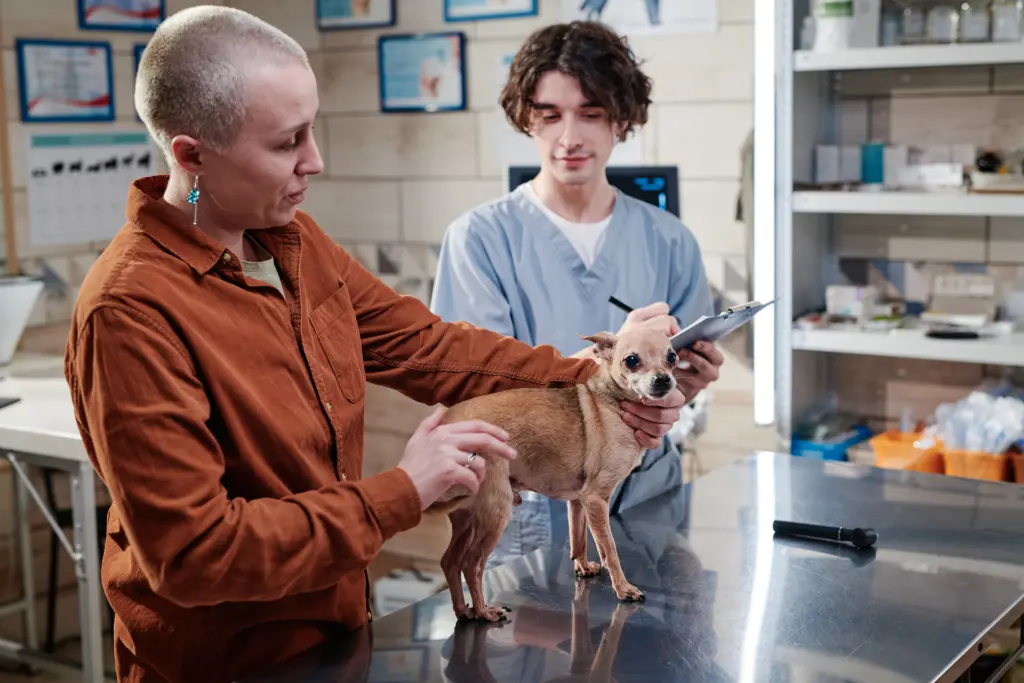
- Breed: Some breeds, such as Chihuahas, German Shepherds, Poodles, Dachshunds, Cocker Spaniels, and Terriers, have a higher genetic predisposition towards mammary tumors.
- Hormonal Influence: Estrogen and progesterone exposure greatly impact tumor development. Dogs that go into heat multiple times without being bred face increased risks of getting breast cancer.
- Diet & Obesity: Studies suggest that overweight dogs at a young age are more likely to develop mammary tumors later in life.
What are the Symptoms of Breast Cancer in Dogs?
Recognizing early symptoms is crucial for successful treatment. Common signs of mammary tumors in dogs include:
- Lumps or Masses: Firm, round, or irregularly shaped lumps under the skin along the lower abdomen and other areas where the mammary glands are. These areas also include the chest, midsection, and flesh surrounding and in-between the nipples.
- Swelling or Inflammation: One or more mammary glands in those areas may appear swollen.
- Ulceration or Bleeding: Some tumors may rupture or develop sores.
- Pain or Sensitivity: The dog may react when the affected area is touched even if they show none of the above symptoms.
- Discharge from the Nipples: Unusual secretions, sometimes mixed with blood.
- Lethargy or Weight Loss: Advanced cases may lead to loss of appetite and general fatigue.
What is the Survival Rate for Dogs with Breast Cancer?
Survival rates for dogs with breast cancer vary depending on factors like tumor size, malignancy, and early detection. The 5-year survival rate for dogs with small, benign tumors is over 90%, especially when surgically removed early. However, for dogs with malignant mammary tumors, survival rates can be significantly lower.
Factors that affect prognosis include:
- Tumor Size: Tumors smaller than 3 cm tend to have a much better prognosis.
- Lymph Node Involvement: If breast cancer has spread to the dog’s lymph nodes, survival rates decrease.
- Metastasis: Once the breast cancer spreads to the lungs or other organs of the dog, survival rates drop drastically. Life expectancy at this point for the patient can be less than 12 months.
- Tumor Grade: Low-grade tumors (less aggressive) have higher survival rates than those of high-grade, fast-growing tumors.
How is Breast Cancer in Dogs Treated?
Treatment depends on the severity and stage of the disease, each with their own side effects and recovery strategies. The most common treatments include:
- Surgical Removal:
- The primary treatment for mammary tumors.
- A lumpectomy may be performed for small, localized tumors.
- A mastectomy (partial or full removal of the mammary chain) is considered for larger or multiple tumors.
- Side Effects: Dog may act stressed and withdrawn after the procedure for a while.
- Recovery Strategy: Incisions heal in a 2-4 week span. Be on the lookout for infection around the surgery areas. Limit physical activities of dogs – so no running or jumping. To that end, do not stress the dog too much. Soothe and comfort rather than excite them.
- Chemotherapy:
- Used for malignant cases or if cancer has spread.
- Drugs like doxorubicin and carboplatin are commonly used.
- Can extend survival time but is not always curative.
- Side Effects: Dogs are more resilient to the side effects of chemotherapy than humans. The American Kennel Club article “What to Know About Chemotherapy for Dogs with Cancer” notes that only 20-30% of canine patients experience the usual nausea, vomiting, and lethargy. Even then, those side effects typically last a week at most. Hair loss is rare.
- Recovery Strategy: Though the vet should be consulted just to be safe about what to give one’s dog after chemotherapy, appetite stimulants or anti nausea medication can be provided depending on their chief lingering side effects.
- Radiation Therapy:
- Less commonly used but may be helpful for inoperable tumors or post-surgical cases with incomplete tumor removal.
- Side Effects: Localized skin irritation, with a very low risk of outright burns. Fatigue.
- Recovery Strategy: Full skin recovery can be achieved in 2-3 weeks after treatment with regular topical care approved by a vet (ex. Aloe Vera)
Hormonal therapy is another oncological procedure that dogs can undergo to have breast cancer treated, but its effectiveness is debatable, as it has a tendency to inflict severe side effects on dogs like uterine infection, nausea, lethargy, appetite loss, and vomiting with no outright guarantees of tumor regression.

What Research and Advances Exist in Canine Breast Cancer?
Ongoing research continues to improve our understanding and treatment of breast cancer in dogs. Some recent breakthroughs include:
- Genetic Studies: Identifying genes linked to mammary tumors in dogs, helping breed-specific screening and prevention.
- Targeted Therapy: New medications targeting specific cancer cell pathways are being explored.
- Immunotherapy: Using a dog’s immune system to fight cancer is a promising area of research.
- Comparative Oncology: Since canine and human breast cancers share similarities, research on dogs helps inform new treatments for both species.
Breast cancer in dogs is a serious yet treatable condition, especially when caught early. Proactive screening, early spaying, and prompt medical attention can significantly reduce the risk of a beloved pet being affected by it. While it is regrettable that certain dog breeds are more susceptible to breast cancer than others, the species as a whole is rather robust when it comes to dealing with the side effects of cancer treatments. With proper care, they can make great recoveries after successful procedures.
As research continues to advance, better treatment options and improved survival rates offer hope for dogs diagnosed with this common yet challenging disease. That said, as it is so common, pet owners should remain as vigilant against it as they would for human breast cancer. It’s extremely advisable that they regularly check for lumps and other symptoms, and consult a veterinarian if any abnormalities arise.
FAQ: Key Insights on Canine Breast Cancer
Q: How serious is breast cancer in dogs?
A: Breast cancer, or mammary gland tumors, is one of the most common cancers in female dogs and can affect males too.
Q: How does dog breast cancer differ from human breast cancer?
A: Dog breast cancer features a wider variety of tumor types and is heavily influenced by hormones, unlike the screening-detected human form.
Q: How common is breast cancer in dogs?
A: It accounts for over 50% of tumors in female dogs, with 1 in 4 unspayed females affected.
Q: What increases the risk of breast cancer in dogs?
A: Spaying before the first heat cycle drastically lowers the risk to less than 0.5%.
Q: What are the symptoms of breast cancer in dogs?
A: Lumps or masses along the mammary glands are a primary sign to watch for.
Q: What is the survival rate for dogs with breast cancer?
A: Dogs with small, benign tumors can have a 5-year survival rate over 90% with early surgery.
Q: How is breast cancer in dogs treated?
A: Surgery, such as lumpectomy or mastectomy, is the primary treatment for mammary tumors.
Q: What research advances exist for canine breast cancer?
A: Immunotherapy is a promising new approach to fighting canine mammary tumors.