

How Serious is Paget’s Disease of the Breast?
Paget’s Disease of the Breast (PDB) is a rare but serious form of breast cancer that affects the skin of the nipple and often indicates an invasive breast cancer scenario. It is frequently misdiagnosed as a much milder if still chronic skin condition like eczema or dermatitis. This misdiagnosis can delay treatment, potentially worsening the patient’s condition.
Early detection is crucial because Paget’s Disease often signifies cancer that is already deep in a person’s breast tissue. Unlike inflammatory breast cancer, which often presents at an advanced stage, PDB’s visible symptoms may signal either early or advanced underlying cancer, depending on its type and extent. So while it is treatable, especially in early stages, prompt medical attention is necessary to improve outcomes.

What is Paget’s Disease of the Breast?
Not to be confused with Paget’s Disease of Bone, it is named after British surgeon and pathologist Sir James Paget. Sir James was one of the pioneers of linking clinical findings with microscopic observations. He also discovered Extramammary Paget’s Disease that affects the genitalia.
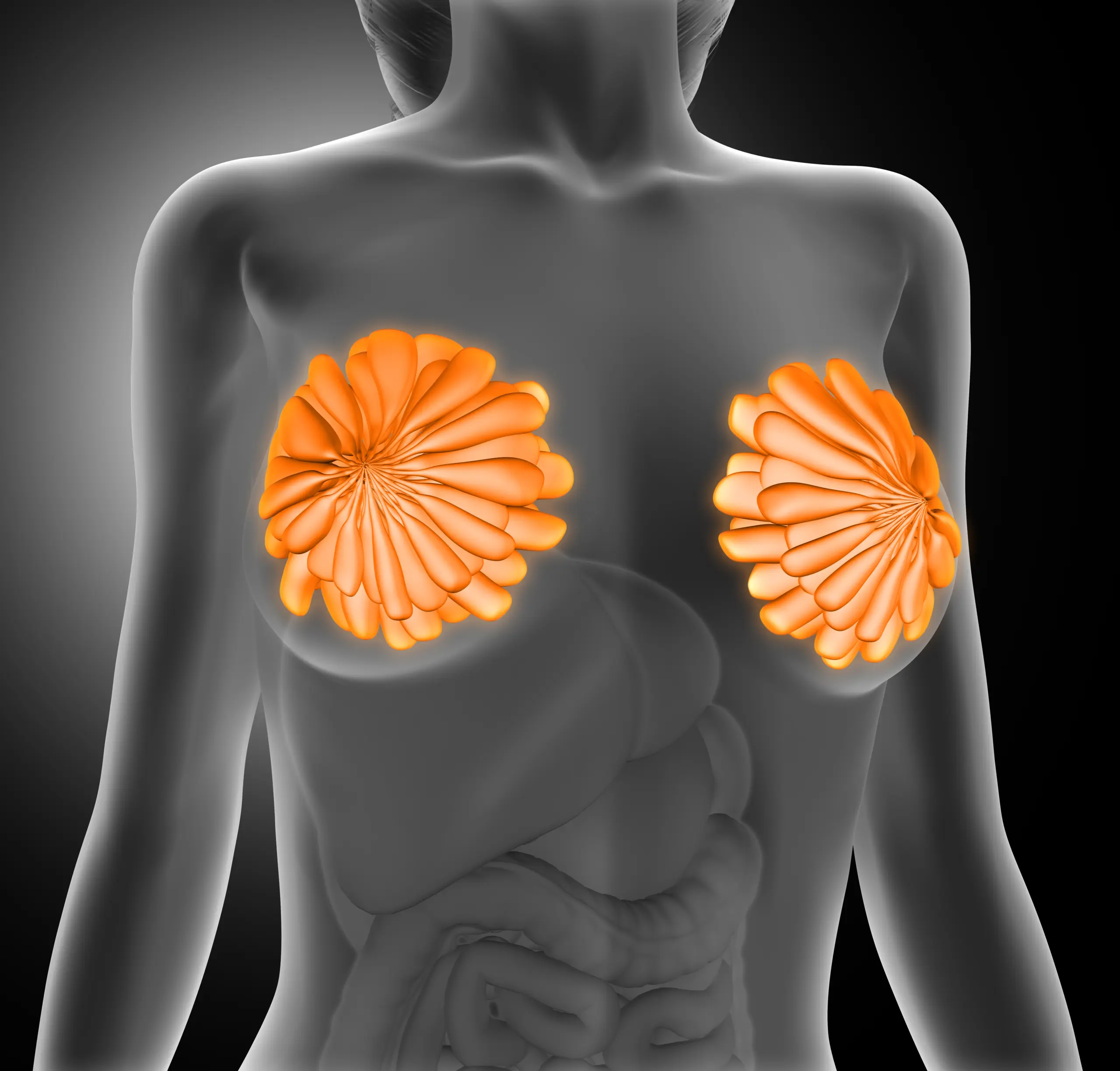
Paget’s Disease of the Breast is a rare type of breast cancer that begins in the ducts of the breast. It originates in the breast ducts and spreads to the surface of the nipple and areola if untreated. Unlike other breast cancers that form lumps, Paget’s Disease mainly presents itself as visible skin irritation around the nipple.
What makes it particularly problematic is that it’s usually a sign of an additional underlying kind of breast cancer a patient also has. It can be either a type of ductal carcinoma or an invasive breast cancer. Should either of these be present alongside Paget’s disease, the severity of this second breast cancer is what determines just how serious the person’s situation is.
How Rare is Paget’s Disease of the Breast?
Paget’s Disease of the Breast is uncommon, occurring in about 1-4% of all breast cancer patients. It is more frequently diagnosed in women over 50 and is rare in men, though cases have been reported. Most individuals with this condition also have underlying breast cancer, either DCIS or invasive ductal carcinoma.
Those with the following risk factors may want to consider having additional breast cancer screenings in a year rather than the usual amount:
- Age: Over 50 years of age, with the risk increasing with each year.
- Race & Ethnicity: Though a global ethnic risk factor is yet to be fully defined, a 2020 study featured in the Breast Dis. journal called “Paget disease of the breast: A national retrospective analysis of the US population” observed that it primarily appeared among white demographics in United States of America.
- Gender: Though women are more likely to get PDB, this sort of cancer can affect men as well in rare cases.
- Breast Cancer History: According to the Mayo Clinic’s “Paget’s Disease of the Breast” section, If a patient has had any sort of breast cancer in the past, even if it wasn’t Paget’s Disease, they have an increased likelihood of it manifesting in the other breast.
- Family History: Like many other types of breast cancer, the likelihood of a patient being afflicted is higher if it has a high occurrence in their family’s medical history.
- Radiation Exposure: Either due to frequent exposure or even due to necessary medical radiation treatments to the chest area.
- Obesity and Physical Inactivity: Excess fat raises estrogen levels to potentially excessive degrees.
Please keep in mind that many common breast cancer risk factors such as dense breast tissue, early menstruation, late menopause, hormone replacement therapy, and BRCA1/BRCA2 mutations still apply to Paget’s Disease of the Breast.
What Are the Unique Symptoms and Challenges of Paget’s Disease of the Breast?
Symptoms of Paget’s Disease of the Breast
Unlike typical breast cancer, Paget’s disease primarily affects the nipple and areola. Symptoms include:
- Unlike benign nipple conditions, the symptoms of Paget’s Disease of the Breast only appear on one breast rather than spread to both.
- Persistent redness, flaking, or crusting of the nipple skin. This consistently fails to meaningfully abate when conventional nipple inflammation treatments are applied, which can be a swift indicator that a person is dealing with Paget’s disease.
- Itching, burning, or tingling sensations.
- Flattened or inverted nipple that was previously normal.
- Yellowish or bloody nipple discharge.
- A lump in the breast, found in 50-60% of Paget’s disease cases.
- Ulceration or erosion of the nipple in advanced stages. This Paget’s Disease of the Breast symptom can be both extremely uncomfortable and disfiguring for the breast.
Notably, the recurring “orange peel” (peau d’orange) skin hardening breast cancer symptom may indicate that a case of PDB with an underlying invasive cancer is in a late stage.
Diagnostic Challenges
Because its symptoms can mimic those of other skin conditions, diagnosing Paget’s Disease requires multiple tests:
- Clinical Breast Exam – A doctor checks for lumps or skin changes.
- Mammogram – Identifies underlying tumors.
- Breast Ultrasound/MRI – Provides a clearer picture of abnormalities.
- Skin Biopsy – Confirms the presence of Paget’s cells.
Nipple Discharge Analysis – Tests for cancerous cells.
Early and accurate diagnosis is crucial for improving survival rates. Patients should keep the aforementioned risk factors in mind, as well as pay attention if apparently conventional breast skin irritations do not subside with the usual solutions.
Is Paget’s Disease of the Breast Better or Worse Than Typical Breast Cancers?
Paget’s Disease of the Breast is neither the most aggressive nor the easiest form of breast cancer to treat. The severity depends on whether underlying cancer is present such as Ductal Carcinoma In Situ (DCIS), Invasive Ductal Carcinoma, and Invasive Breast Cancer. This is very likely as a 2020 case study by the Dermatology Nurses’ Association called “Paget’s Disease of the Brease Presenting as Nipple Ulceration With Normal Mammogram” noted that 90-95% of PDB cases are all but packaged with an extra underlying case of breast cancer.
To summarize:
- If no invasive cancer is found, which is rare but not unheard of, the prognosis will be favorable.
- If underlying invasive breast cancer is present, outcomes depend on the stage of that cancer rather than Paget’s disease. The spread and severity of it have important ramifications on the sorts of treatments a patient will need to undergo.
What Are the Treatment Options for Paget’s Disease of the Breast?
Treatment depends on whether underlying breast cancer is present:
- Surgery
- Mastectomy (removal of the breast) is often recommended if cancer is extensive. Surgery is often the most immediate and recommended treatment for Paget’s Disease of the Breast.
- Breast-conserving surgery (lumpectomy) may be an option if no invasive cancer is present.
Warning: May not be suitable for patients with extensive metastasis.
- Radiation Therapy
- Used after breast-conserving surgery to prevent recurrence.
Side Effects: Skin Irritation, Fatigue, Swelling.
- Used after breast-conserving surgery to prevent recurrence.
- Hormonal Therapy (if the cancer is hormone receptor-positive)
- Tamoxifen or Aromatase Inhibitors (AIs) to reduce the risk of recurrence.
Side Effects (Tamoxifen): Hot flashes, vaginal discharge, mood swings, fatigue, hair thinning, possible cataracts, increased risk of blood clots, liver inflammation.
Side Effects (AIs): Joint pain or stiffness, osteoporosis, hot flashes, night sweats, vaginal dryness, hair thinning, and an increased susceptibility to high cholesterol.
- Tamoxifen or Aromatase Inhibitors (AIs) to reduce the risk of recurrence.
- Chemotherapy
- Used for invasive cases to target cancer spread.
Side Effects: Hair Loss, Nausea, Fatigue, Low Blood Cell Counts
- Used for invasive cases to target cancer spread.
- Targeted Therapy (for HER2-positive cases)
- Trastuzumab (Herceptin) if the cancer overexpresses HER2.
Side Effects: Fatigue, fever, chills, nausea, migraines, muscle or joint pain, diarrhea, increased low-grade infection risk, heart problems, and lung inflammation.
- Trastuzumab (Herceptin) if the cancer overexpresses HER2.
What is the Survival Rate for Paget’s Disease of the Breast?
Survival rates for those afflicted with Paget’s Disease of the Breast depend on early detection and, of course, whether invasive cancer is present:
- No invasive cancer: 95-100% 5-year survival rate.
- With invasive cancer, but localized: 85-90% 5-year survival rate.
- Advanced (metastatic) cases: 30-40% 5-year survival rate.
What Are the Chances of Recurrence?
The recurrence risk of Paget’s Disease of the Breast as well as associated underlying cancers is based on:
- Stage at diagnosis – Early detection lowers recurrence risk.
- Treatment type – This is chiefly relevant if the patient chose to undergo a mastectomy, as this removal reduces recurrence compared to a lumpectomy.
- Hormone receptor status – HR-positive cases respond well to hormonal therapy.

What’s New in Paget’s Disease of the Breast Research?
Ongoing studies are exploring:
- Improved imaging techniques: For earlier detection. In particular, advances in digital breast tomosynthesis (DBT)—a 3D mammography technique—have shown promise in improving detection rates by reducing overlap of breast tissue, which can obscure subtle signs of PDB.
- Genetic profiling: To predict recurrence risks. Studies are investigating whether genetic signatures in Paget cells—such as mutations in PI3K pathways —can predict the likelihood of recurrence or progression to invasive disease.
- Immunotherapy: A relatively new tact for Paget’s Disease treatment. The success of immune checkpoint inhibitors in attacking aggressive cancer cells such as those of triple-negative breast cancer show promise for doing the same for PDB.
AI-assisted diagnosis: To reduce misdiagnosis rates, AI algorithms are being trained to analyze imaging and biopsy data, distinguishing PDB’s subtle signs from benign skin conditions with greater accuracy.
Conclusion: Should You Be Concerned About Paget’s Disease of the Breast?
Paget’s Disease of the Breast is serious but treatable, especially when diagnosed early. If you experience persistent nipple changes that do not abate with the usual treatments, seek medical attention promptly. These irritations making themselves known are both uncomfortable and a worrying hint that an underlying invasive cancer may be accompanying PDB.
FAQ: Paget’s Disease of the Breast
- How serious is Paget’s Disease of the Breast (PDB)?
PDB is a serious breast cancer that often signals underlying cancer, but it’s treatable if caught early—delays from misdiagnosis can worsen outcomes. - What exactly is Paget’s Disease of the Breast?
It’s a rare breast cancer starting in the ducts and spreading to the nipple, usually indicating another cancer like ductal carcinoma in situ (DCIS) or invasive carcinoma. - How rare is Paget’s Disease of the Breast?
It affects 1-4% of breast cancer patients, mostly women over 50, and is rare in men. - What are the symptoms of Paget’s Disease of the Breast?
Look for persistent nipple redness, crusting, discharge, or a lump—unlike benign issues, it affects only one breast, and it does not meaningfully abate with conventional skin irritation treatments. - Is Paget’s Disease worse than other breast cancers?
Its severity depends on the underlying cancer; if that cancer isn’t invasive, the prognosis is good, but with it, outcomes vary by its stage. - What treatments are available for Paget’s Disease of the Breast?
Options include mastectomy, lumpectomy, radiation, hormonal therapy, chemotherapy, or trastuzumab for HER2-positive cases. In general, surgery is the recommended treatment of PDB. - What’s the survival rate for Paget’s Disease of the Breast?
It ranges from 95-100% (no invasion) to 30-40% (metastatic) over 5 years, depending on cancer spread. - Can Paget’s Disease of the Breast come back?
Recurrence risk drops with early detection, getting a mastectomy, and hormone therapy (if the patient is receptor-positive). - What’s new in Paget’s Disease research?
Advances include better imaging (DBT), AI analysis and genetic profiling (PI3K) for diagnostics. Immunotherapy is showing promise as a surgery alternative. - My breast area is itchy. Should I worry about Paget’s Disease of the Breast?
Yes, if nipple changes persist despite treatment—seek help fast, as it may hint at underlying cancer.